January 01, 2026
2026 New Year Message from the President
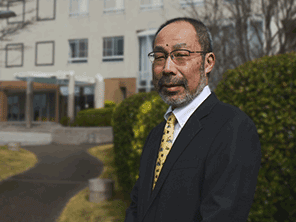
As we welcome the New Year, I would like to extend my greetings to all of you.
The year 2026 marks the beginning of a new quarter-century in the third millennium. Looking back on the 25 years since the year 2000 ‒ often referred to as the millennium year ‒ we are reminded of numerous events that have threatened human society, including terrorism and conflict, extreme weather, large-scale natural disasters, financial crises, and pandemics.
Turning our attention to academia, these past 25 years can be described as a quarter-century of paradigm shifts. In the early 2000s, the American computer scientist Jim Gray proposed the concept of “Data-Intensive Science” as the “Fourth Paradigm,” following experimental science, theoretical science, and computational science. Data-intensive science is a data-driven research approach that derives new scientific insights through the collection and analysis of massive amounts of data, employing techniques such as data mining and machine learning.
However, the explosive advances in generative AI over the past few years have led many to suggest that the era of a “Fifth Science” will soon arrive. In this “AI-driven research,” AI is no longer merely a tool; rather, it is expected to play an active and autonomous role in the process of formulating hypotheses, designing experiments, analyzing data, and discovering new knowledge. Recalling the words of Jules Verne, often called the “father of science fiction,” ‒ “Anything one man can imagine, other men can make real” ‒ the “Fifth Science” can hardly be dismissed as mere science fiction. This naturally raises the question: what role should human researchers play in such an era?
Last year’s Nobel Prizes brought great excitement throughout Japan, with the rare double award after a decade to Professor Shimon Sakaguchi for the Prize in Physiology or Medicine and Professor Susumu Kitagawa for the Prize in Chemistry. This occasion once again highlighted the fascination and importance of basic research, as well as the true nature of research ‒steadfastly pursuing one’s own working hypotheses to the very end. Considering how to harmonize such an approach to research with AI is itself an important responsibility for researchers today.
Amid rapid and profound changes in our times, SOKENDAI is committed to reflecting on what it should do now so that the younger generations who will carry the future can envision, as something personal to them, a better world and higher levels of scholarship. We will continue to dedicate ourselves wholeheartedly to the mission of the university, engaging in sincere discussions with colleagues both within and beyond our institution. I kindly ask for your continued warm support and cooperation in the year ahead.
January 1, 2026
Nagata, Takashi Ph.D.
President
The Graduate University for Advanced Studies, SOKENDAI