
April 01, 2026
Message from Graduates
YOSHIDA Tomohiro, School of Physical Sciences, Department of Astronomical Science
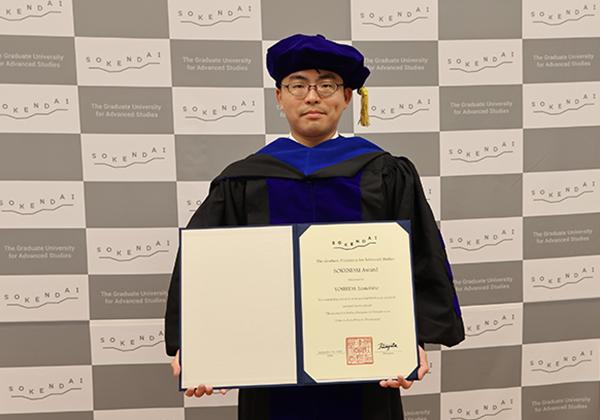
I earned my degree in the Department of Astronomical Science (currently the Astronomical Science Program), which is based at the National Astronomical Observatory of Japan. The National Astronomical Observatory of Japan is a major center for astronomical research, not only in Japan but also internationally. Even as a student, being able to conduct research in such a privileged environment was an extremely valuable experience for my career. In addition, the peaceful surroundings of Mitaka, where the campus is located, were ideal for focusing on research. I would also like to emphasize that this fortunate student life was made possible by the exceptionally generous financial support provided by SOKENDAI and the Department, which is unparalleled within Japan. I strongly recommend SOKENDAI to anyone aspiring to become a researcher.
School of Physical Sciences, Department of Astronomical Science
Graduate of September 2025
National Astronomical Observatory of Japan
Winner of the 15th SOKENDAI Award
SASAI Takeyuki, School of Multidisciplinary Sciences, Department of Statistical Science
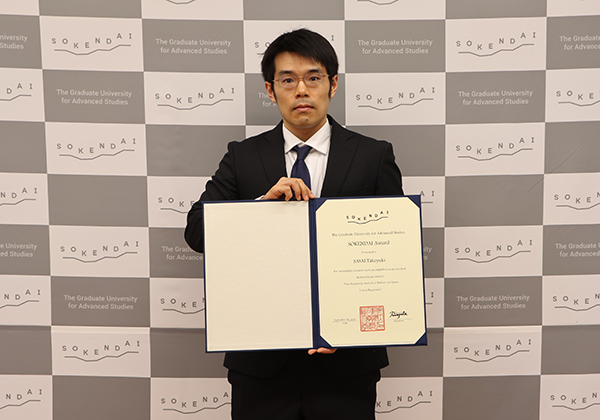
I earned my degree in the Department of Statistical Science. At the Institute of Statistical Mathematics, the host institution, faculty and students with diverse expertise and interests come together, and the library, computing resources, and other facilities are well equipped—providing an exceptionally supportive environment for research. I was in fact able to pursue my work freely and enjoyably, for which I am deeply grateful. Institute events offer students opportunities to present their research, and even working professionals like me who pursue a doctorate alongside our jobs can deepen our interactions with ISM members through these activities. With the rise of generative models, I believe that broad knowledge spanning both applications and theory in how we handle data will continue to be in demand. I will continue my research so that I can contribute, even in a small way, to this ongoing trend.
School of Multidisciplinary Sciences, Department of Statistical Science
Graduate of September 2025
The Institute of Statistical Mathematics
Winner of the 15th SOKENDAI Award
IKEDA Ryota, School of Physical Sciences, Department of Astronomical Science
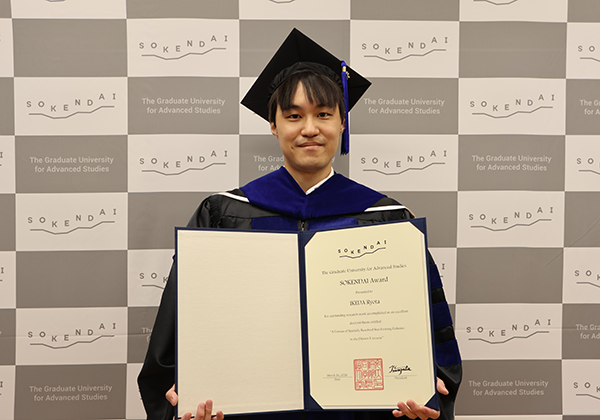
I am honored to receive the 16th SOKENDAI Prize. I would like to express my sincere gratitude to everyone who supported me throughout my PhD.
I enrolled in the Department of Astronomical Science in 2021 during the COVID-19 pandemic. Thanks to the financial and mental support from SOKENDAI, I was able to continue my research throughout my PhD, although there were limited opportunities to discuss with my collaborators in person during the first two years. The campus of the astronomy course is located in National Astronomical Observatory of Japan (NAOJ) in Mitaka, Tokyo, where students have access to an international research environment and extensive support and supervision from the faculty members. There are many research visits from both domestic and international institutions, making it an ideal place to develop a research career.
School of Physical Sciences, Department of Astronomical Science
Graduate of March 2026
National Astronomical Observatory of Japan
Winner of the 16th SOKENDAI Award
NASU Tatsuhiro, School of Physical Sciences, Department of Fusion Science
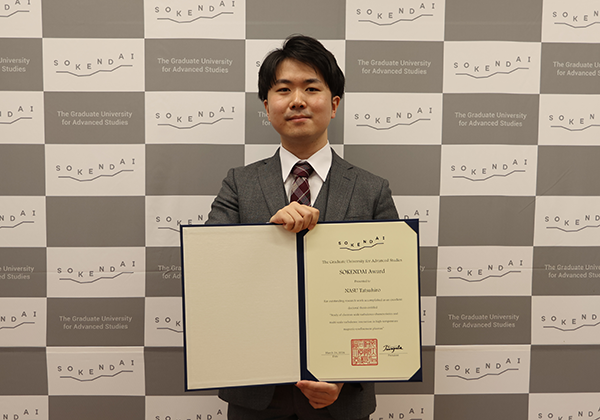
I spent my academic life in the Department of Fusion Science at the National Institute for Fusion Science (NIFS) in Toki, Gifu. I performed experimental research using the Large Helical Device (LHD) operated by NIFS. Because of its unique design and the diversity and performance of its measurement and heating systems, the LHD is highly regarded internationally for its rarity. Combined with an environment where I can readily seek advice and engage in discussions with the outstanding researchers and engineers at NIFS, I can contribute to cutting-edge research achievements even as a student. With support from the SOKENDAI Student Dispatch Program, I have also been able to present my findings at many international conferences. Furthermore, by participating not only in conferences but also in experiments at overseas facilities, I gained a wealth of knowledge, including hands-on know-how at the operational level. I will continue to strive for excellence by applying these experiences.
School of Physical Sciences, Department of Fusion Science
Graduate of March 2026
National Institute for Fusion Science
Winner of the 16th SOKENDAI Award
TOKUNAGA Soma, School of Advanced Sciences, Department of Evolutionary Studies of Biosystems
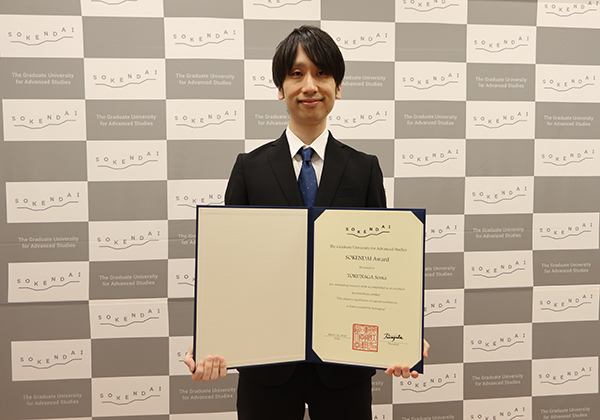
I enrolled in SOKENDAI and spent the first two years in the Department of Polar Science (now the Polar Science Program), followed by three years in the Department of Evolutionary Studies of Biosystems (now the Integrated Evolutionary Science Program). Both departments provided strong support, allowing me to pursue my research in a relaxed and encouraging environment. The close relationship between faculty and students was especially appealing, making it easy to ask for advice whenever needed. I also frequently conducted fieldwork, and the faculty were flexible in accommodating my schedule in lectures and seminars. Thanks to supportive fellow students, I was able to complete the five-year doctoral program without feeling isolated. I believe SOKENDAI is an excellent environment for students who are motivated to take initiative.
School of Advanced Sciences, Department of Evolutionary Studies of Biosystems
Graduate of March 2026
Research Center for Integrative Evolutionary Science
Winner of the 16th SOKENDAI Award
YUN HUISU, Graduate Institute for Advanced Studies, Japanese Language Sciences
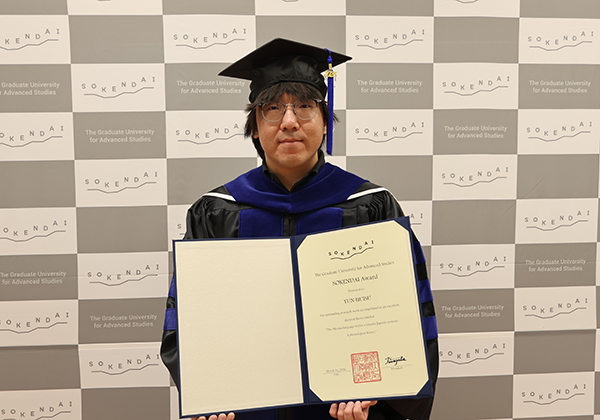
The Japanese Language Sciences program is a three-year doctoral program hosted at the National Institute for Japanese Language and Linguistics (NINJAL) located in Tachikawa, less than half an hour away by train from Tokyo's Shinjuku district. Officially, the course aims to foster a new generation of researchers capable of conducting evidence-based research on the Japanese language, but we also have professors and students who specialize in more traditional subdisciplines, such as historical and comparative Japonic linguistics. The environment here is excellent, with access to the NINJAL Research Library, which houses some 170,000 books. Moreover, three other programs offered by SOKENDAI are hosted at neighboring institutes in Tachikawa (a total of four out of twenty!), creating opportunities to interact with peers from different fields of study.
Graduate Institute for Advanced Studies, Japanese Language Sciences
Graduate of March 2026
National Institute for Japanese Language and Linguistics
Winner of the 16th SOKENDAI Award